
Integrated Drug Substance Manufacturing for Global Biosimilar Programs
- Global biosimilar programs is entering a new era of growth, with the potential for streamlined regulatory paths to significantly reduce development costs and timelines.
- While India and China offer substantial cost advantages and have secured numerous high-value global partnerships, Europe remains a critical hub due to its skilled workforce and integrated end-to-end manufacturing capabilities.
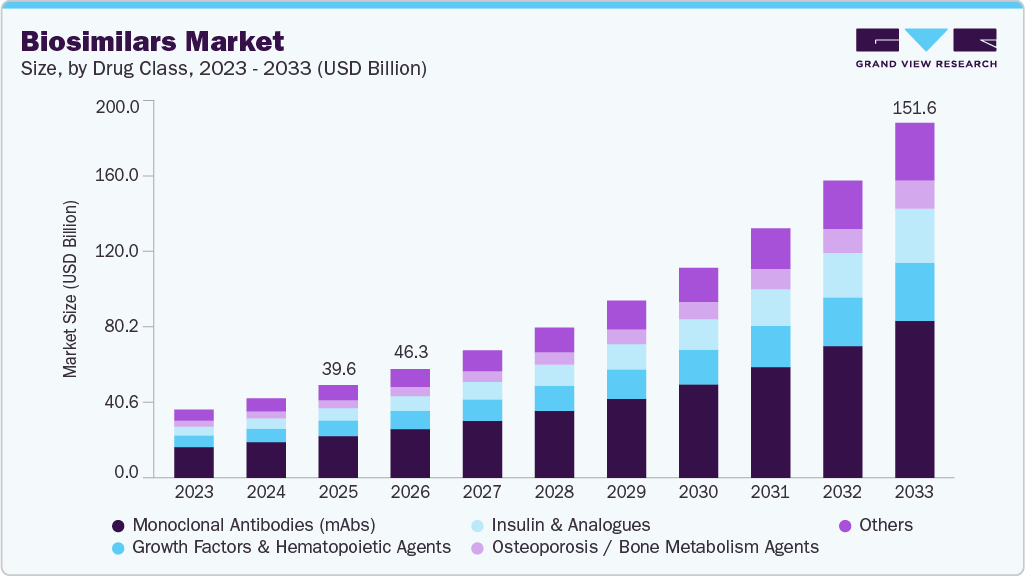
Biosimilar market is currently in a state of expansion, driven by the approaching patent expirations of numerous blockbuster biologics. Analysts predict the market value will grow at a compound annual growth rate (CAGR) of 18.4%, rising from $39.6 billion in 2025 to over $150 billion by 2033.1 This surge is largely due to the urgent need for cost-effective alternatives to expensive originator therapies, particularly in the fields of oncology and immunology.
Global Biosimilar Programs on the Market
The global biosimilars market has entered a more mature phase, but its development remains uneven.
In Europe, 2026 marks 20 years of the EU biosimilar regulatory framework, and the European Medicines Agency reported that its Committee for Medicinal Products for Human Use issued positive opinions for 41 biosimilars in 2025 (the highest annual number to date) and 160 positive opinions from 180 biosimilar reviews over the framework’s lifetime.
In the United States, the FDA’s public product table contained 87 approved biosimilars by July 2026, while a substantial future opportunity is being created by patent expiries: industry analysis identifies 118 biologics facing loss of exclusivity between 2025 and 2034, although only a small proportion have publicly identified biosimilars in development.
At the same time, approval does not automatically ensure commercial success. Many factors can influence whether a biosimilar remains viable after launch:
- Procurement design
- Reimbursement
- Prescribing incentives
- Number of competors
- Sustainable pricing
Whether expressed as an average practical development estimate or as the median measured in historical approval cohorts, the interval from the beginning of clinical development to EMA or FDA authorization remains very long and needs to be shortened. This is the major bottleneck. Typically it spans seven to nine years and costs between $100 million and $300 million. Analysis of the first 20 FDA-approved biosimilars found a median of 69.9 months from initiation of Phase I testing to approval. Phase III confirmatory trials alone can account for up to 50% of a developer’s total budget and last several years.2
To address this, regulators are increasingly open to a streamlined biosimilar development path. In that proposition Phase III efficacy studies may be waived if a candidate demonstrates virtually indistinguishable structural, functional, and pharmacokinetic profiles. Such a shift could shorten development timelines by two to three years. It also reduce total costs by as much as 50%.
Advances of Biosimilars CDMOs from the Far East
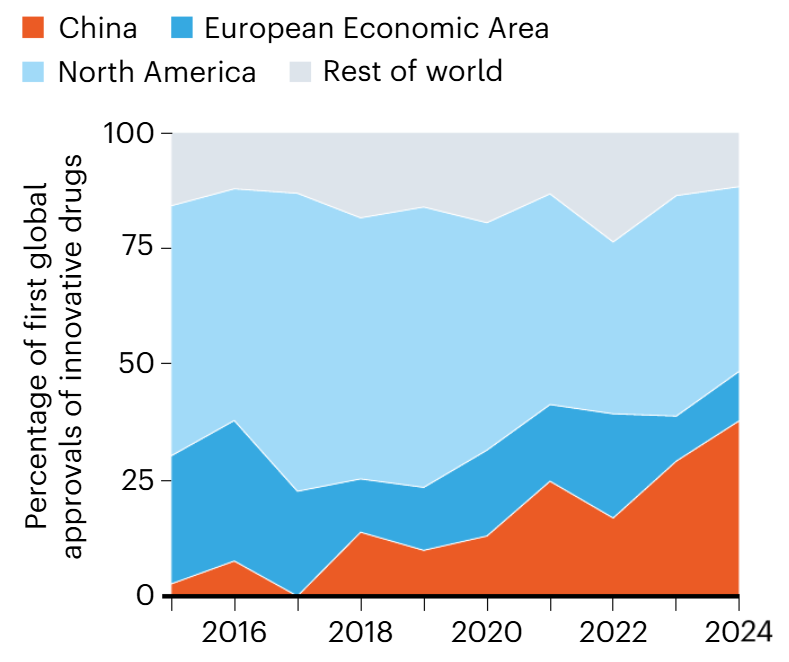
The Far East has emerged as a powerhouse in the global biopharma sector. China and India leading the surge in new assets and manufacturing capacity. China is now responsible for approximately 30% of the world’s innovative drug pipeline. Middle Kingdom has significantly cut its domestic approval durations through comprehensive regulatory reforms.3
India, long known as the “pharmacy to the world” for generics, is rapidly evolving into a hub for biosimilars, supported by its governmental Biopharma SHAKTI initiative. BCG estimated that the Indian CRDMO sector could grow from approximately $3 billion to $22 billion by 2035.4
The primary competitive advantage of manufacturing biologics in India and China is the structural cost efficiency. Chinese discovery programs operate at roughly one-third to one-half of global costs. Clinical development is 20% to 50% less expensive than in the United States. India offers even lower drug substance manufacturing costs, estimated at 33% below those based in US.
Notable collaborations in last three months in this region include:
- Sun Pharma bought Organon for $12 billion (April 26, 2026). This is the largest overseas acquisition by any Indian pharma company.
- Bristol Myers Squibb and Hengrui Pharma (May 12, 2026). Global strategic collaboration and licensing agreement covering 13 oncology programs.
- Pfizer and Innovent Biologics (May 28, 2026). This massive deal involves 12 oncology programs, including antibody-drug conjugates and multi-specific antibodies. For four key programs, the companies will co-develop and co-commercialize the assets worldwide, sharing both costs and future profits.5
- AstraZeneca double with Sino Biopharm (July 8, 2026) and Dizal Pharmaceutical (July 14, 2026). AstraZeneca paid to secure ex-China rights for a drugs.
- Formycon and OneSource Specialty Pharma (July 14, 2026). This strategic partnership provides Formycon global biosimilar programs with integrated DS and DP manufacturing from OneSource’s Bangalore facility.6
Recent transactions show that multinational companies increasingly view these markets as sources of intellectual property and development programs. This significantly changes the perspective, as they are no longer solely suppliers of manufacturing capacity. This trend can indirectly strengthen the biosimilars and biologics CDMO sector by international technology transfer.
Capabilities of Biosimilars Manufacturing in Europe
For global biosimilar sponsors, the strategic comparison should extend beyond the quoted cost per batch. A lower manufacturing of biosimilars price may be offset by:
- Duplicated testing
- Additional sponsor oversight
- Difficult logistics
- Geopolitical exposure
- Regulatory remediation
- Insufficient drug characterization
- Delays in process development


Europe still has outstanding biologics capabilities. But can they continue to win the next manufacturing programme when technically credible competitors can increasingly offer comparable quality, integrated capabilities and a more attractive cost base. Manufacturing leadership is rarely lost overnight.
The competitive edge for European partners lies in the high quality of its skilled workforce and a deep scientific heritage. European scientists co-pioneered monoclonal antibody technology, and the region continues to produce experts across the full spectrum of biotech R&D and biologics manufacturing. This expertise ensures that European facilities maintain gold-standard quality systems, which is critical for meeting the EMA’s rigorous safety and efficacy requirements. Furthermore, European CDMOs have excelled in implementing a platform approach to manufacturing, leveraging single-use systems and bioprocessing. These technologies enhance flexibility and scalability while reducing contamination risks and product loss.
To maintain this leadership, Europe must increase internal collaboration and regional investment. The EU Biotech Act serves as a cornerstone for this strategy. It provides policy support for this direction. This Act specifically aims to support biosimilar development and production, potentially mobilizing between €0.9 billion and €7.6 billion in investment for EU-based manufacturing. The Act aims to transform Europe into the most attractive destination for global biosimilar programs by 2030. Streamlining multinational clinical trials and simplifying regulatory procedures can create integrated European biomanufacturing ecosystem.7
Prepared by:

Marketing Specialist
Sources and further reading
- Grand View Research. Biosimilars Market Analysis Report (2026-2033). 2026.
- Lee CC, Kesselheim AS, Sarpatwari A. Clinical Development Times for Biosimilars in the United States. Mayo Clin Proc. 2020; 95(10): 2152-2154.
- Lee LC, Qian J. China’s Biotech Boom: Why the Nation Must Collaborate to Stay Ahead, Nature. 2026; 650: 296-298.
- Agarwalla V, Suryaprakash S, Mathur S, Parijat K, Jain S, Pant Y. Unleashing the Tiger: Indian CRDMO Sector. Boston Consulting Group. 2025.
- Reuters. Innovent Biologics, Pfizer strike $10.5 bln cancer drug deal amid China biotech boom. 2026.
- The Economic Times.OneSource Specialty Pharma partners with Formycon AG to manufacture biosimilars. 2026.
- European Commission. Proposal for a REGULATION OF THE EUROPEAN PARLIAMENT AND OF THE COUNCIL on establishing a framework of measures for strengthening Union’s biotechnology and biomanufacturing sectors particularly in the area of health and amending Regulations (EC) No 178/2002, (EC) No 1394/2007, (EU) No 536/2014, (EU) 2019/6, (EU) 2024/795 and (EU) 2024/1938 (European Biotech Act). 2025/1022.