
GMP Biologics Manufacturing in End-to-End Drug Development
- GMP biologics manufacturing underpins every stage of drug development, linking process design and product quality.
- Early integration of GMP standards into biologics process development reduces downstream risk, and accelerates commercial readiness.
- Regulatory expectations for GMP compliance biologics emphasize lifecycle management, data integrity, and continuous verification to ensure sustained product quality and patient safety.
The Role of GMP Biologics Manufacturing Across End-to-End Drug Development
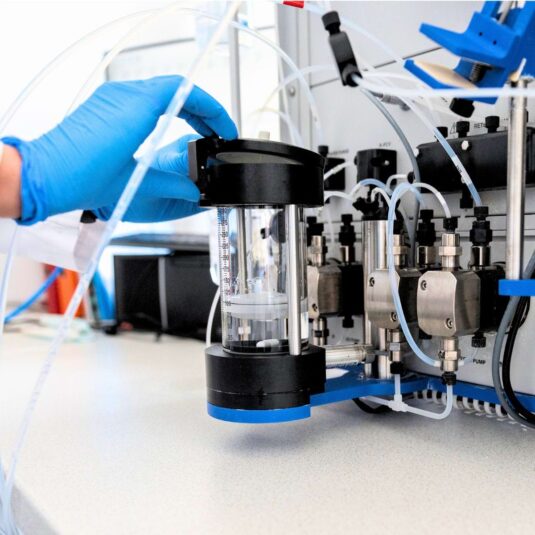
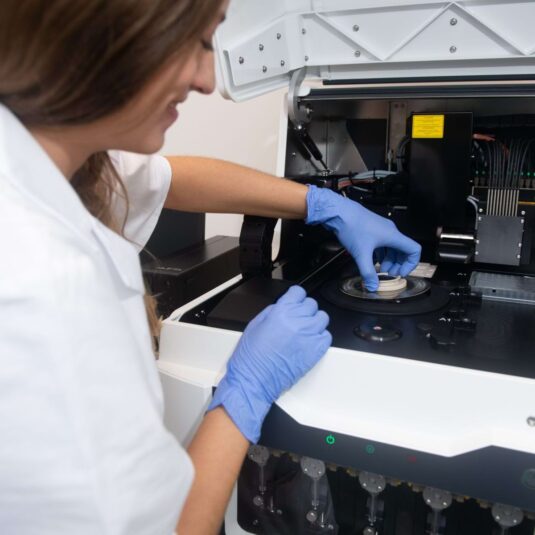
GMP biologics manufacturing serves as the structural backbone of end-to-end drug development. That process integrates scientific discovery with industrial-scale production under a rigorously controlled quality framework. The fundamental relationship between process and product elevates the importance of GMP compliance biologics from a regulatory obligation to a scientific necessity, ensuring that each stage of development contributes to a consistent and well-characterized therapeutic profile.
As biologics progress from early discovery into clinical evaluation and eventual commercialization, manufacturing strategies must evolve in parallel, maintaining continuity in critical quality attributes while adapting to increasing scale and regulatory scrutiny.
Early-stage development often occurs in non-GMP environments. Typically, the initial stages of developing biologic drugs are conducted in R&D laboratories. The transition toward GMP-compliant systems must be strategically orchestrated to avoid discontinuities that could compromise comparability. This requires the establishment of scalable unit operations. As drugs progress through the various stages of development and enter clinical trials, higher quality standards become necessary.
Biologics CDMOs play a critical role in enabling this continuum, offering specialized infrastructure and expertise that bridge early development and commercial manufacturing. Their involvement allows sponsors to access platform technologies, standardized quality systems, and regulatory experience that facilitate rapid progression through development milestones. However, reliance on external partners also introduces complexity in maintaining alignment of quality expectations, documentation practices, and control strategies. Effective collaboration between sponsors and CDMOs is therefore essential to ensure that GMP biologics manufacturing remains coherent and traceable across organizational boundaries.1
Integrating GMP Requirements from Early Development Stages
Historically, early development focused primarily on proof-of-concept and exploratory process design. GMP considerations introduced later as products approached clinical evaluation. However, this approach often resulted in significant process changes, comparability challenges, and delays in regulatory progression. Modern biologics manufacturing GMP strategies emphasize the early incorporation of quality-by-design principles, enabling developers to define critical quality attributes and process parameters at the outset and to build processes that are inherently robust and scalable.
Integrating GMP compliance biologics into early development involves the establishment of development systems that mimic GMP conditions without imposing unnecessary rigidity. This includes:
- Use of qualified raw materials
- Control of documentation procedures
- Preliminary validation of analytical methods
While full GMP compliance may not be required at this stage, aligning development activities with GMP expectations ensures that data generated are reliable, traceable, and suitable for regulatory submission. This alignment also facilitates the scale-up to GMP biologics manufacturing by minimizing the need for rework or additional studies.
The role of analytical development is particularly significant in enabling early GMP integration. Advanced analytical techniques, including mass spectrometry, chromatography, and bioassays, are required to characterize complex biologics and to detect subtle variations that may impact safety or efficacy. Developing these methods early and ensuring their robustness and transferability to GMP environments is essential for maintaining continuity throughout development. Analytical comparability studies also play a critical role in bridging changes in process or scale, providing evidence that product quality remains consistent despite modifications.2
GMP Biologics Manufacturing from Clinical Supply to Commercial Production
The transition from clinical supply to commercial production represents one of the most critical phases in end-to-end biologics manufacturing. During clinical development, manufacturing processes are often operated at relatively small scales and may undergo iterative refinement as new knowledge is generated. However, as products approach commercialization, these processes must be validated, and demonstrated to consistently produce material that meets predefined quality specifications.
Scaling up biologics manufacturing presents unique challenges due to the sensitivity of biological systems to environmental conditions. Changes in mixing, mass transfer, and shear forces can impact cell growth, protein expression, and product quality attributes. To address these challenges, scale-down models are developed to simulate commercial-scale conditions in a laboratory setting, enabling detailed study of process behavior and supporting risk assessment. These models are critical for understanding the impact of scale on process performance and for designing control strategies that ensure consistency across scales.3
Successful collaboration with CDMOs requires clear communication, well-defined responsibilities, and alignment on quality standards to ensure that GMP biologics manufacturing is executed consistently and effectively. This is especially important for smaller companies with limited internal production capabilities. Using standardized platforms can accelerate the path to product commercialization.
Quality Systems and Control Strategies Supporting End-to-End GMP Manufacturing
Central component of quality systems in GMP biologics manufacturing is the control strategy, which defines how critical quality attributes are maintained within acceptable limits through the control of process parameters, raw materials, and analytical testing. This strategy is developed based on a thorough understanding of the process and its impact on product quality. The strategic conclusions are based on the results of research into the development of the process and its characteristics. The control strategy must be comprehensive, encompassing in-process controls, release testing, and ongoing monitoring to ensure that the manufacturing process remains within the defined design space.
In the context of biologics, where process variability can directly impact product quality, robust quality systems are essential for maintaining control and enabling continuous improvement. Deviation and change management processes are essential for maintaining control over the manufacturing process and for addressing issues that arise during production. Deviations must be thoroughly investigated to identify root causes and to implement corrective and preventive actions that prevent recurrence. Change control processes ensure that any modifications to the process, equipment, or materials are evaluated for their potential impact on product quality and are implemented in a controlled manner. These processes are critical for maintaining the validated state of the manufacturing process and for supporting continuous improvement.
Regulatory Expectations for GMP Compliance Throughout Drug Development
Regulatory expectations for GMP compliance biologics are grounded in the principle that product quality must be built into the manufacturing process and maintained throughout the product lifecycle. Regulatory agencies such as the FDA and EMA require that biologics manufacturers demonstrate a thorough understanding of their processes and implement control strategies that ensure consistent product quality. This includes:
- Identification of critical quality attributes
- Characterization of process parameters
- Establishment of validated manufacturing processes that operate within defined limits
Throughout drug development, regulatory expectations evolve in parallel with the maturity of the manufacturing process. During early clinical development, the focus is on ensuring that manufacturing processes are sufficiently controlled to produce safe and consistent material for human studies. As development progresses, regulators expect increasing levels of process understanding and control. The final step is to submit a comprehensive application for marketing authorization of the biological product within a GMP biologics manufacturing framework. This document contains detailed information on manufacturing processes, control strategies, and validation data.4,5
A key regulatory concept in biologics manufacturing GMP is lifecycle management, which emphasizes the continuous monitoring and improvement of manufacturing processes. This includes the implementation of continued process verification programs that monitor process performance during commercial production and identify trends that may indicate potential issues.
Regulatory agencies also place significant emphasis on data integrity and documentation, requiring that all aspects of manufacturing are fully documented and that records are maintained in a manner that ensures their accuracy and traceability. Inspections by regulatory authorities assess not only compliance with GMP requirements but also the effectiveness of quality systems and the organization’s ability to maintain control over its processes.6
Ensuring Process Consistency and Product Quality in End-to-End GMP Manufacturing
Ensuring process consistency and product quality is the ultimate objective of GMP biologics manufacturing. Consistency is particularly challenging in biologics manufacturing due to the inherent variability of biological systems and the sensitivity of product quality attributes to process conditions. Achieving consistent performance requires a deep understanding of the relationship between process parameters and product quality.
One of the key tools for ensuring consistency is the establishment of a well-defined design space, which represents the multidimensional range of process parameters that result in acceptable product quality. Operating within this design space provides assurance that the manufacturing process will produce product that meets quality specifications, even in the presence of normal variability.
Process robustness is also influenced by equipment design and facility layout, which must support consistent operation and minimize the risk of contamination or cross-contamination. Single-use technologies have become increasingly prevalent in biologics manufacturing, offering advantages in flexibility and reduced risk of cross-contamination. However, they also introduce new considerations, such as extractables and leachables, that must be addressed through appropriate testing and control strategies.
FAQ
Prepared by:

Marketing Specialist
References
- Knurek J. Biologics CDMO Solutions for the Future of Therapeutics. Mabion Science Hub. 2025.
- Stroumpou A. The key role of GMP analytical testing for drug products. European Pharmaceutical Review. 2025.
- Fenton GA, Mitchell DA. Cellular Cancer Immunotherapy Development and Manufacturing in the Clinic. Clin Cancer Res. 2023; 29(5): 843-857.
- European Medicines Agency. ICH Q5E Biotechnological/biological products subject to changes in their manufacturing process: comparability of biotechnological/biological products. 2005.
- U.S. Food and Drug Administration. Biologics License Applications (BLA) Process.
- Al Azawei A, Loughrey K, Surim K, Connolly ME, Naughton BD. The management of good manufacturing practice (GMP) inspections: a scoping review of the evidence. Front Med (Lausanne). 2025; 12: 1687864.