
GMP Cell Banking as a Foundation of Safe Biologics Manufacturing
- GMP cell banking provides the biological foundation for modern biologics manufacturing.
- The establishment of well-characterized, genetically stable cell banks supports the consistent production of monoclonal antibodies and other recombinant therapeutic proteins throughout the product lifecycle.
- The transition from cell line development to GMP-compliant Master Cell Banks and Working Cell Banks links upstream process development, analytical characterization, manufacturing control strategies, and regulatory compliance into a unified framework designed to ensure product quality and patient safety.
GMP Cell Banking in Biologics Manufacturing Scope and Importance
The foundation of every biologics lies in the selection, development, and preservation of an appropriate production cell line. This cell line must be capable of consistently expressing a therapeutic molecule that satisfies predefined quality attributes. GMP cell banking therefore serves as the mechanism through which manufacturers establish a controlled biological starting point. This starting point minimizes variability across development, commercial manufacturing, and lifecycle management while supporting compliance with current Good Manufacturing Practice (cGMP) principles.
Cell banking should be viewed as an integrated quality system encompassing:
- Cell line preservation
- Cell line characterization
- Cell line qualification
- Risk management
- Biologic drug lifecycle control
It is therefore not merely a storage activity but a central component of biologics manufacturing control. The objective is to establish a reproducible biological reference that serves as the source material for every manufacturing batch produced over many years. In some cases, this reference must support production for decades. Without such a controlled reference system, manufacturers would face progressive biological drift caused by repeated cell passaging, spontaneous mutation, epigenetic changes, selective pressure, or environmental adaptation.1
From Cell Line Development to GMP Cell Banking Systems
The objective of cell line development is to establish a genetically stable manufacturing substrate suitable for GMP cell banking. This substrate must be capable of sustaining predictable product quality throughout clinical development and commercial manufacturing.2
The process typically begins with the construction of an expression vector containing the gene of interest. This vector also includes regulatory elements that ensure efficient transcription and translation within the selected host cell. Modern vectors incorporate optimized promoters, enhancer sequences, transcription termination signals, and selectable marker genes. They also include increasingly sophisticated regulatory elements designed to enhance expression stability while minimizing transcriptional silencing over extended culture periods.
Once the recombinant construct has been generated, it is introduced into the host cell through transfection or other suitable gene delivery methods. This process results in a heterogeneous population of cells that differ substantially in:
- Transgene copy number
- Genomic integration site
- Expression level
- Metabolic activity
- Long-term stability
These differences arise because integration events occur largely at random within the genome. As a result, the inserted gene is exposed to varying chromatin environments that influence transcriptional efficiency. The majority of transformed cells therefore fail to exhibit the combination of productivity, growth characteristics, and genetic stability required for pharmaceutical manufacturing. Comprehensive clone selection consequently becomes an essential component of process development.3
Chinese hamster ovary (CHO) cell lines remain the dominant mammalian production platform because of their favorable growth characteristics and adaptability to suspension culture. They are also widely used because of their ability to generate human-compatible glycosylation patterns. Regardless of the host selected, manufacturers must demonstrate that the production cells remain suitable throughout the product lifecycle. They must also show that any observed variability remains scientifically understood, controlled, and acceptable from both manufacturing and regulatory perspectives.4
Once a candidate clone has been selected, it undergoes extensive characterization before being considered suitable for GMP cell banking and GMP biologics manufacturing. This characterization confirms whether the clone has the stability and performance profile required for further development. Scientists evaluate genetic stability by monitoring:
- Productivity
- Transgene integrity
- Copy number
- Product quality
These assessments are performed under conditions intended to simulate commercial manufacturing. These studies determine whether the production clone maintains stable expression throughout the anticipated manufacturing lifespan. They also reveal whether gradual declines in productivity or changes in product quality occur as cells continue to proliferate.
Analytics performed during this phase extends beyond the cells themselves. It also includes detailed examination of the expressed therapeutic protein using orthogonal analytical methods capable of assessing:
- Molecular identity
- Purity
- Glycosylation
- Higher-order structure
- Charge heterogeneity
- Biological activity
- Impurity profiles
The objective is to demonstrate that the production clone consistently generates material meeting predefined quality expectations. This evidence is needed before significant investments are made in GMP manufacturing infrastructure.5
Parallel to biological characterization, process development teams optimize upstream culture conditions that will ultimately support GMP manufacturing. These activities ensure that the selected clone can perform reliably under scalable production conditions. The goal is to maximize process robustness while maintaining product quality. These optimization studies frequently employ Design of Experiments (DoE) methodologies to identify critical process parameters (CPPs). They also define the relationship between these CPPs and critical quality attributes (CQAs).
Importantly, the selected production clone and the evolving manufacturing process are developed together. Changes in process conditions may influence cellular physiology, while the biological characteristics of the clone determine the process operating window. The successful completion of cell line development marks a transition from research-oriented experimentation. It establishes a controlled manufacturing substrate suitable for GMP cell banking and pharmaceutical production.6
Establishing Master and Working Cell Banks Under GMP Requirements
Before entering drug substance manufacturing, the selected clone is frequently transferred from research laboratories into qualified GMP facilities. The actual preparation of the Master Cell Bank follows a carefully controlled cell expansion process. This process is designed to generate sufficient cell biomass while minimizing unnecessary population doublings. Beginning with the selected production clone, cells are sequentially expanded through progressively larger culture vessels.
Depending on the production platform, expansion may proceed from small shake flasks to orbital shaken bioreactors or controlled stirred-tank bioreactors. The selected expansion pathway must support both cell health and GMP manufacturing control. Manufacturers establish predefined acceptance criteria for:
- Cell viability
- Morphology
- Doubling time
- Metabolite consumption
- Recombinant protein expression
These criteria confirm that the culture remains healthy and representative of the original clone.
Once the target cell density and viability have been achieved, the expanded culture is prepared for cryopreservation. This step uses validated freezing procedures that maximize post-thaw recovery while preserving long-term cellular stability. Cells are harvested under aseptic conditions, concentrated when necessary, and suspended in a qualified cryopreservation medium containing appropriate cryoprotective medium and agents. The most common cryoprotective agent is dimethyl sulfoxide (DMSO). These components reduce intracellular ice crystal formation during freezing. As a result, the cells retain their shape and their structure remains intact.
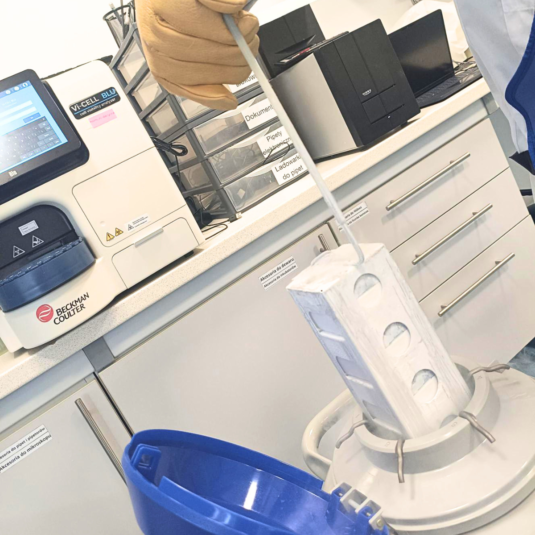
The final cell suspension is dispensed into hundreds or even thousands of sterile cryovials under controlled aseptic conditions. Each vial contains a standardized number of viable cells to ensure manufacturing consistency. Next, the freezing process is carried out. This carefully controlled cooling profile minimizes cellular injury associated with rapid intracellular ice formation or excessive osmotic stress. Both mechanisms may compromise post-thaw viability and productivity. After completion of controlled freezing, the cryovials are transferred into liquid-phase nitrogen storage systems. These systems are maintained at approximately –150°C to –196°C. At these temperatures, metabolic activity effectively ceases. Long-term preservation can therefore be maintained for many years with negligible biological change.7
Following cryopreservation, the newly established Master Cell Bank enters the formal GMP cell banking qualification process before it can be released for manufacturing use. It must first undergo formal qualifications. Instead, representative vials undergo an extensive qualification program. This analytical panel confirms that the banking process has successfully preserved the intended biological characteristics while excluding contamination or other quality risks.
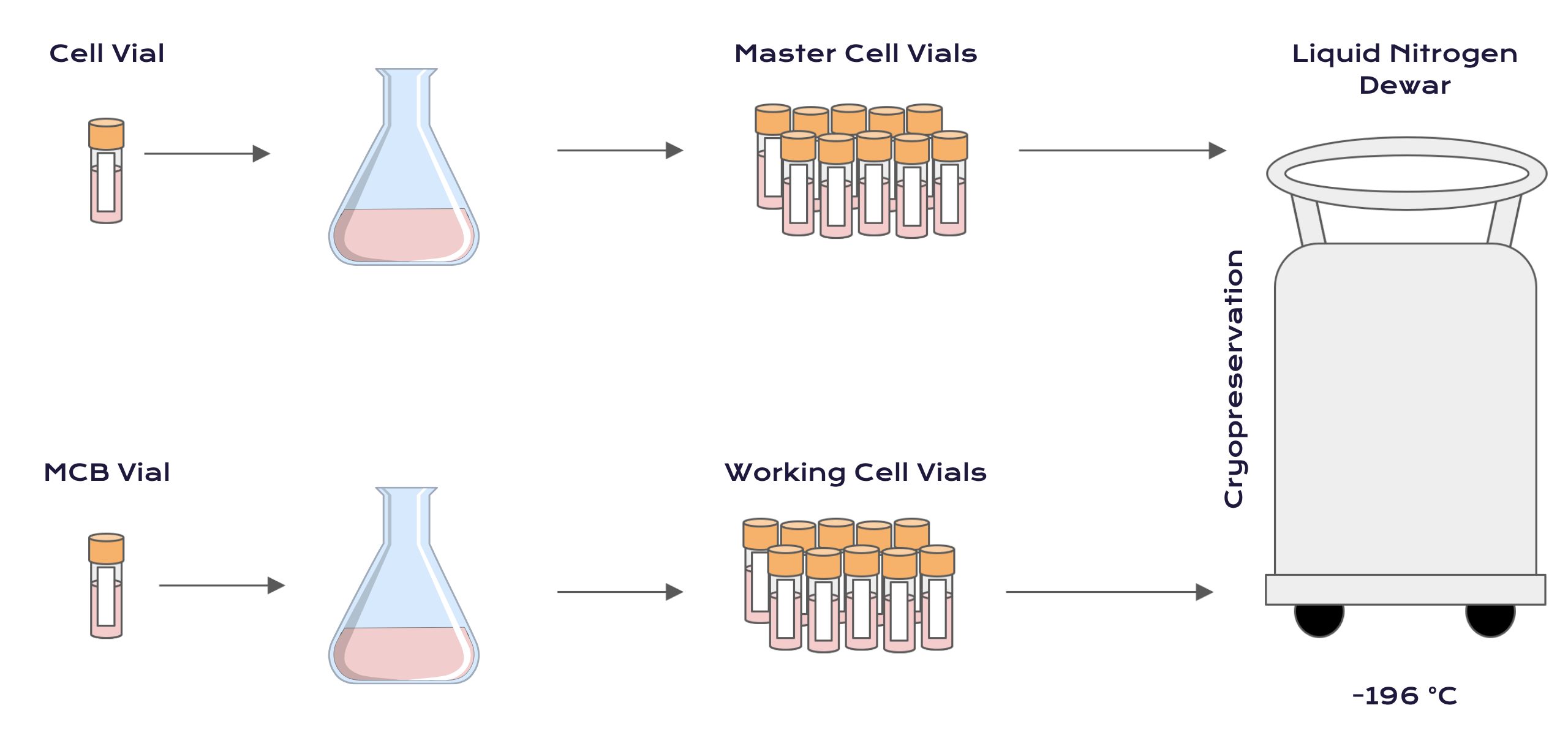
The establishment of the Working Cell Bank begins only after the Master Cell Bank has successfully completed qualification and received formal quality approval. A small number of qualified MCB vials are removed from cryogenic storage and thawed under controlled GMP conditions. These vials initiate a new expansion process that closely resembles the original banking procedure.
Cells are cultured using validated manufacturing processes under predefined environmental conditions. Throughout expansion, the same emphasis is placed on minimizing unnecessary passage number and preserving cellular integrity. The objective of this expansion is to generate a substantially larger inventory of production-ready cryovials that remain biologically representative of the qualified MCB. After expansion, cells are harvested, formulated with qualified cryopreservation medium, aseptically filled into standardized cryovials, and subjected to validated controlled-rate freezing. The cryovials are subsequently transferred into long-term cryogenic storage using procedures equivalent to those employed during Master Cell Bank preparation.7
Because every Working Cell Bank originates directly from the qualified Master Cell Bank, manufacturers maintain complete genealogical documentation throughout the banking process. This documentation links every Working Cell Bank vial to its corresponding Master Cell Bank and, ultimately, to the original production clone.
Quality Control and Characterization in GMP Cell Banking
One of the primary objectives of cell bank characterization is confirmation of cellular identity.
Since modern biologics manufacturing often involves multiple development programs operating simultaneously within the same organization or contract manufacturing facility, accidental cell line mix-ups or cross-contamination represent significant quality risks. These risks must be controlled through robust identity testing and documentation. Cell identity testing confirms that the banked material corresponds precisely to the intended production clone. It also excludes the presence of unrelated cell populations.5
Microbiological safety constitutes another essential pillar of GMP cell bank qualification. This is because contamination introduced during banking may propagate throughout every subsequent manufacturing campaign. Sterility testing therefore verifies the absence of viable bacteria and fungi. It uses validated pharmacopeial methods capable of detecting a broad range of aerobic and anaerobic microorganisms. Equally important is mycoplasma testing, since mycoplasmas lack cell walls and frequently escape visual detection during routine culture. These organisms may profoundly alter cellular metabolism, protein expression, and product quality without producing obvious signs of contamination. Mycoplasma testing combines traditional culture-based assays with rapid nucleic acid amplification technologies. These methods are capable of detecting extremely low concentrations of contaminating organisms.8
Closely associated with identity testing is the evaluation of genetic stability. Manufacturers perform stability studies designed to demonstrate that the production clone maintains acceptable biological performance. These studies evaluate performance over the maximum population doubling level expected during routine manufacturing.
Regulatory Expectations for GMP Cell Banking in Biologics Manufacturing
Regulatory oversight of GMP cell banking has evolved significantly alongside the increasing complexity of innovative biologics manufacturing. Early regulatory evaluations focused primarily on sterility and basic cell line documentation. Contemporary regulatory frameworks now require manufacturers to demonstrate comprehensive scientific understanding of the production cell substrate throughout the entire product lifecycle. Regulatory agencies recognize that the production cell line represents the origin of every CQA associated with a recombinant biologic. This makes the integrity of the cell banking system fundamental to product quality, process consistency, and patient safety.
Consequently, GMP cell banking is an integral component of the pharmaceutical quality system. It connects research and development, process development, manufacturing, quality control, quality assurance, and lifecycle management. Manufacturers must therefore provide extensive evidence demonstrating that their cell banking strategy effectively controls biological variability. They must also ensure complete traceability from the original production clone through commercial manufacturing and post-approval changes.
International harmonization has substantially improved regulatory consistency across major pharmaceutical markets under EMA or FDA standards. This consistency helps manufacturers align cell banking strategies with expectations in key regulatory regions. ICH Q5D guideline specifically addresses the derivation and characterization of cell substrates used for the production of biotechnological and biological products. It establishes internationally accepted principles for Master Cell Bank and Working Cell Bank development, characterization, storage, documentation, and testing.9,10
Ensuring Consistency and Traceability in GMP Biologics Manufacturing Through Cell Banking
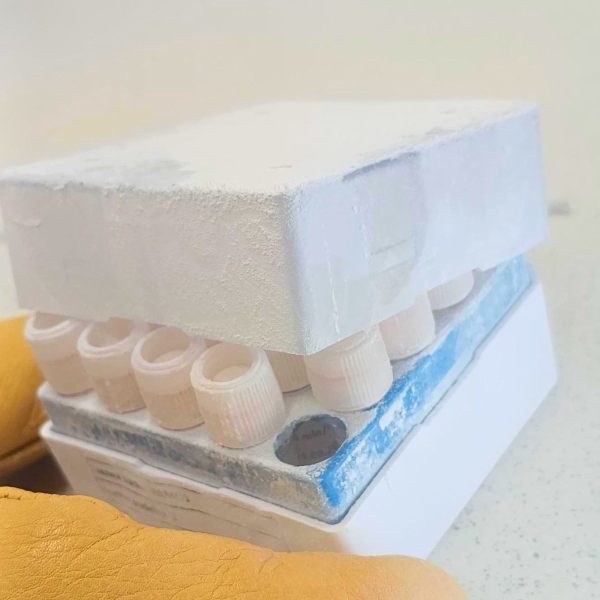
Manufacturing consistency in GMP cell banking begins with the principle that every production batch should originate from an identical biological starting point. This principle ensures that each batch begins with a controlled and qualified cellular source. During routine commercial manufacturing, individual Working Cell Bank vials are removed from controlled cryogenic storage only when a new production campaign is initiated.
After thawing, the cells enter a carefully controlled seed train expansion process. This process sequentially increases biomass until sufficient inoculum is available for the production bioreactor. Because every seed train begins with cells derived directly from the same qualified Master Cell Bank, manufacturers reduce a major source of biological variability. This approach helps avoid the variability associated with continuous cell propagation. Instead of relying on cultures that have undergone months or years of repeated passage, each manufacturing campaign essentially resets the biological system. It does so by returning to an early-passage cellular population whose characteristics have already been comprehensively characterized and approved. This approach substantially reduces the likelihood that accumulated genetic mutations will influence antibodies production over time.2
The concept of limiting cell age represents an essential mechanism through which cell banking promotes manufacturing consistency. Every replication cycle introduces opportunities for spontaneous genetic changes which may gradually alter cellular behavior. Although individual changes are often biologically insignificant, their cumulative effects over numerous passages can influence recombinant therapeutic protein expression. Control of passage number essential to biologics manufacturing. For this reason, manufacturers define maximum population doubling levels, passage numbers, and production generation limits during process development and validation. These limits ensure that commercial manufacturing remains within the validated biological operating range.11
Traceability represents another defining characteristic of GMP cell banking and is inseparable from manufacturing consistency. Pharmaceutical quality systems require complete documentation linking every commercial batch to its biological origin. This documentation enables manufacturers to reconstruct the entire manufacturing history of any product released to the market. This traceability begins with the parental host cell line and extends through:
- Vector construction
- Transfection
- Clone selection
- Cell line development
- Master Cell Bank preparation
- Working Cell Bank generation
- Seed train expansion
- Production bioreactor inoculation
Every cryovial within the Master and Working Cell Banks receives a unique identifier. This identifier is associated with manufacturing records, analytical testing, storage history, inventory management, and subsequent manufacturing use. Modern electronic quality management systems integrate these records with laboratory information management systems (LIMS), manufacturing execution systems (MES), electronic batch records, and enterprise resource planning platforms. Together, these systems create an uninterrupted digital chain of custody throughout the product lifecycle. This comprehensive traceability enables rapid investigation of deviations and facilitates product recalls when necessary. It also provides regulators with confidence that manufacturers maintain complete control over critical biological materials.
FAQ
Prepared by:

Marketing Specialist

Business Development Specialist
References
- Bird P, Hale G. Cell banks and stability of antibody production. Methods Mol Med. 2000; 40: 303-307.
- Knurek J, Janiszewska S. Tailoring Cell Line Development for Efficient Biologics Process Outcomes. Mabion Science Hub. 2026.
- Fong JHC, Ceroni F. Transgene integration in mammalian cells: The tools, the challenges, and the future. Cell Syst. 2025; 16(12): 101426.
- Lonkwic-Kargul K, Moskal A, Knurek J. CHO Cell Lines for Recombinant Protein Production. Mabion Science Hub. 2025.
- Schulz A, Munro T, Puklowski A, Slack E, Tolstrup AB, Otte K. Systematic review and data-driven insights into CHO cell engineering for next-generation antibody production. MAbs. 2026; 18(1): 2615475.
- Weiskirchen S, Monteiro AM, Borojevic R, Weiskirchen R. Unlocking Potential: A Comprehensive Overview of Cell Culture Banks and Their Impact on Biomedical Research. Cells. 2024; 13(22): 1861.
- Patel P. The science of cell line development for biologics: Improving stability and yield. IBI. 2025.
- Fratz-Berilla EJ, Angart P, Graham RJ, Powers DN, Mohammad A, Kohnhorst C, Faison T, Velugula-Yellela SR, Trunfio N, Agarabi C. Impacts on product quality attributes of monoclonal antibodies produced in CHO cell bioreactor cultures during intentional mycoplasma contamination events. Biotechnol Bioeng. 2020; 117(9): 2802-2815.
- EMA. ICH Q5D Derivation and characterisation of cell substrates used for production of biotechnological/biological products. 1998.
- US Pharmacopeia. General Chapter, 〈1042〉 Cell Banking Practices for Recombinant Biologics. 2023.
- Tevelev B, Farnsworth S, Pontell SK, Verbovšek U, Li GB, Collins S. Establishment of Limit of In Vitro Cell Age (LIVCA) for Biologics Manufacturing Process. PDA J Pharm Sci Technol. 2026; 80(1): 104-120.
- Kozlowski S, Swann P. Current and future issues in the manufacturing and development of monoclonal antibodies. Adv Drug Deliv Rev. 2006; 58(5-6): 707-722.