
Tailoring Cell Line Development for Efficient Biologics Process Outcomes
- Biologics cell line development typically begins with platform-based CHO systems. Mammalian cell line platforms dominate biologics manufacturing due to their ability to produce complex glycoproteins and human-like post-translational modifications.
- Cell line choice directly influences productivity, regulatory acceptance, and long-term scalability.
- Mabion offers CLD service using the Beacon Select™ System to accelerate clonal selection and choose the most effective cells for drug development.
Cell Line Development in Biologics Manufacturing
The cell line development workflow in biologics manufacturing follows from gene construct to stable production clone. Following transfection into a monoclonal host cell line, typically under defined and tightly controlled culture conditions, selective pressure is applied to enrich cells harboring the gene of interest. Single-cell cloning is then performed to isolate recombinant cells capable of stable and high-level protein expression.
For most recombinant proteins, mammalian cell lines are the expression system of choice due to their capacity for human-like protein folding and post-translational modifications. Among them, the CHO cell lines remains the dominant platform, with lineages such as CHO-K1, CHO-S, CHO-DG44, and CHO-DUXB11 widely used in commercial manufacturing. Different CHO derivatives offer flexibility in selection systems and metabolic characteristics, supporting tailored cell line development approaches. CHO cells combine high productivity, adaptability to suspension culture, and regulatory acceptance, making them central to tailored cell line development strategies. Nevertheless, their genome plasticity and chromosomal heterogeneity require careful control and monitoring to ensure long-term stability and consistent product quality.1
To achieve high titers without compromising stability, expression systems incorporate selectable markers and amplification strategies. Common systems include DHFR/methotrexate and glutamine synthetase (GS)/methionine sulfoximine, which drive integration and copy number amplification of the gene of interest.2 Vector architecture, promoter strength, and epigenetic context influence expression stability, requiring strategic design during early cell line optimization. By calibrating selection stringency and amplification protocols, developers can balance productivity with genomic integrity, supporting long-term manufacturing reliability.3
Comprehensive analysis of therapeutic protein expression during CLD integrates productivity metrics with molecular characterization. High-throughput screening platforms assess titer, growth kinetics, and metabolite profiles, while orthogonal analytical methods characterize critical quality attributes such as glycosylation, aggregation, and charge variants. This panel provides a combination of quantitative and qualitative analytical tools. Next-generation sequencing (NGS) is increasingly being integrated into cell line development processes in biology. This method allows for mapping integration sites, verifying plasmid integrity, and monitoring genome stability.4
Demonstrating monoclonality is a regulatory and scientific imperative in cell line development. A monoclonal cell line must originate from a single progenitor cell to ensure genetic uniformity and consistent therapeutic protein expression. Regulatory agencies such as the FDA require documented evidence of monoclonality, often through imaging-based confirmation of a single originating cell during cloning. Complementary approaches, including high-coverage NGS, further verify clonal origin and genetic integrity, strengthening assurance of stability and compliance in cell line development for GMP manufacturing.
Designing Cell Line Attributes to Support Downstream Performance
Critical quality attributes (CQAs) of cell lines form the conceptual bridge between cell line development and downstream purification performance. At the cellular level, CQAs include identity, microbiological sterility, genetic stability, and consistent viability, all of which underpin process robustness. These parameters together determine repeatability across different passages and scales.5 From a product perspective, CQAs extend to titer, glycosylation pattern, aggregation state, and host-cell protein (HCP) burden, attributes that directly influence biological activity, half-life, and immunogenicity.6,7
Several downstream steps are indirectly shaped by cell line attributes. Especially chromatography operations are indirectly defined by the quality of the upstream:
- Protein A affinity chromatography, the cornerstone of monoclonal antibody capture, is affected by aggregate levels and Fc integrity shaped during CLD.
- Subsequent ion-exchange chromatography (both CEX and AEX) steps resolve charge variants and remove residual DNA and HCPs, whose abundance reflects cell line characteristics.
- Hydrophobic interaction chromatography and size-exclusion chromatography (SEC) serve as polishing tools to address aggregates and fragments.
Correct clonal selection can significantly streamline downstream development by reducing impurity load and product heterogeneity at the source. Clones with controlled glycosylation profiles minimize the need for extensive polishing steps. Low intrinsic HCP expression reduces the burden on capture and intermediate chromatography. Selecting clones with low aggregation propensity improves Protein A recovery and reduces reliance on additional aggregate removal steps.
Early cell line optimization can translate into fewer purification steps and improved scalability from laboratory to commercial production. Proper preparation of the mobile phase also reduces the load on the chromatographic columns. This lowers process costs and delays the need to replace the columns.
Balancing Productivity, Stability, and Product Quality in Tailored Development Programs
Designing a cell line to meet CQAs requires the integration of advanced genetic engineering tools. Genome editing technologies such as CRISPR/Cas9 enable targeted modulation of apoptosis pathways, or glycosylation enzymes to improve productivity and post-translational control. Introduction of folding chaperones can enhance solubility and reduce aggregation, directly supporting downstream purification efficiency.8,9 In parallel, high-throughput single-cell analysis and microbioreactor systems allow rapid optimization of media, feeds, and culture parameters under bioreactor-relevant conditions before scale-up.10
CQAs are the basis for clone selection in cell line development, with deliberate emphasis on clones exhibiting controlled glycosylation, consistent charge variants, and favorable purity profiles, because those are the attributes most likely to ripple into downstream complexity and clinical comparability risk. The opposing view is that early CQAs analysis can be misleading at lab-scale and may not predict performance after process scale-up. Overly strict early gating can therefore delay timelines. Yet the opposing risk is equally real. Selecting primarily on titer can lock programs into clones that later fail quality, forcing re-cloning and project schedule resets.
CHO productivity benchmarks illustrate the productivity vs. stability debate well. Antibody titers are typically below 1 g/L in batch processes, whereas fed-batch strategies substantially increase productivity, with common titers around 5 g/L, and more often and often reaching above 10 g/L under favorable conditions. 11–13 However, a lot depends on the product modality and the project assumptions. Innovative products will offer different possibilities, but also different needs, compared to biosimilars.
The argument for pushing productivity is straightforward. Higher upstream titers can de-risk capacity and reduce cost-of-goods. The pro-productivity argument is also that these titers enable faster DS accumulation, and greater flexibility during clinical supply. The counterargument is that high-producing clones may be associated with amplified gene copy number and structurally complex integration events, increasing the risk of genomic rearrangements, or the emergence of variant subclones that shift parameters over passages. The risk profile generally rises as selection stringency and amplification intensity increase. That instability can manifest as titer decay, shifts in glycosylation and charge variant profiles, and unexpected impurity patterns, each of which can trigger comparability work during scale-up or tech transfer.
From a regulatory standpoint, both EMA and FDA expectations converge on the need to demonstrate that the production cell substrate is well-characterized and that genetic stability and expression construct integrity are maintained through the limit of in vitro cell age intended for manufacturing. EMA’s adoption of ICH Q5D emphasizes characterization of the cell substrate and verification of expression construct consistency at or beyond production cell age (e.g., via nucleic acid testing or product analysis). FDA guidance aligned with ICH Q5D similarly focuses on derivation/characterization of cell substrates and the information expected in marketing applications. Complementary FDA materials on cell line qualification underscore documenting growth/expression characteristics, identity, and stability-related considerations.14-15
Metabolic profiling often provides an example of where there is a discrepancy between productivity and quality on the one hand and resilience on the other. High lactate can inhibit growth and acidify the medium. Ammonium (often inhibitory above 2 mM) can negatively affect productivity and, critically, glycosylation profile which potentially reflect in drug biological activity and immunogenicity. That making it one of the most critical inhibitory metabolites in CHO cell culture. Feed strategies such as controlling glucose at low levels can reduce lactate but may drive higher glutamine uptake and ammonium formation unless both carbon and nitrogen feeds are managed (or partially replaced), which is why multi-metabolite control is frequently advocated. Metabolic flux analysis support that model. Substantial glucose-derived pyruvate can be secreted as lactate rather than supporting TCA-driven biosynthesis. Shifting cells toward lower lactate and lower ammonium generally improves viability and extends the production phase, producing higher harvest yields.16 That metabolic interventions may shift redox balance, energy state, and Post-translational modifications (PTMs), so profiling works best when it is used to optimize both yield and general cell line robustness rather than treating lactate or ammonia as isolated endpoints. Metabolic profiling improves performance because it targets the physiological mechanisms that shorten culture longevity and erode quality.17,18
Beacon Select System for Predictable Clone Selection Process Outcomes
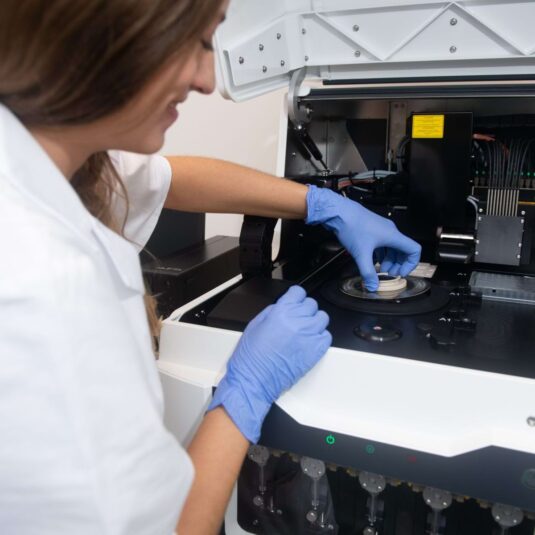
At Mabion, the Beacon Select optofluidic system automates single-cell cloning and functional screening at the microscale, enabling rapid identification of clones with optimal productivity, quality, and stability while ensuring monoclonality, thereby accelerating scale-up readiness and purification robustness.
Clonal selection on the Beacon Select™ System is built around software-controlled optofluidics that replaces multi-week, plate-based single-cell cloning. Single cells are isolated into NanoPen® chambers on OptoSelect® nanofluidic chips using Opto-Electro Positioning (OEP). This approach allows for precise cell placement, continuous imaging, and unambiguous tracking of clonal derivation as cells expand, providing strong image-based evidence of cell line monoclonality. Such image-based monoclonality assurance has been accepted by FDA reviewers as sufficient supporting evidence in regulatory submissions.19
Over several days of on-chip culture, sequential functional assays quantify secretion (e.g., Fc capture assays, phenotype measurements), growth behavior, and other phenotypes on the same clonal lineage, enabling direct ranking of clonal productivity and quality rather than inferring performance from bulk pools. High-value clones are recovered from the chip for off-chip expansion and confirmatory analytics, enabling a seamless transition from on-chip screening to standard scale-up workflows.20
When a partner provides the vector and host cell line, Beacon Select™ System enables to run an accelerated CLD pathway focused on the single-cell cloning, early clone screening, and selection. In this streamlined model, Mabion can complete the path from transfection through selection and cell banking in about 10 weeks. For comparison, in a standard CLD process performed on plates, the same workflow would take about 17-21 weeks. The key enabler is the platform’s ability to screen thousands of clones in parallel and progress candidates without the same resource constraints that often force early pool triage and serial bottlenecks in plate-based approaches. Importantly, the acceleration is achieved while maintaining a monoclonality assurance approach aligned with regulatory expectations. The resulting reduction in cycle time is particularly valuable when clinical timelines require early lock of a manufacturing-representative clone.

In terms of modality, Beacon Select™ System for CLD is positioned for high-throughput production cell line development and can be applied across recombinant therapeutic proteins, including challenging constructs where secretion efficiency and quality attributes are tightly coupled. Mabion’s CDMO offer includes dedicated solutions for mAbs, bispecific antibodies, and ADCs, where early screening for secretion performance and quality-relevant behaviors helps reduce late-stage failures during process development and scale-up. The practical advantage is modality-agnostic throughput: the system can evaluate many more clonal candidates early, enabling stronger statistical confidence that selected clones will perform consistently from lab scale into clinical and commercial production. A solution with CHO cell line offers speed and predictability.
Aligning Cell Line Development with Scale-Up and GMP Readiness
A stable cell line is the foundation for process development. When moving from lab-scale to clinical or commercial scale, small differences can amplify pre-existing clone liabilities. At 10 L, process control is typically tighter and gradients are easier to eliminate, while at 2000 L the clone experiences different hydrodynamics and gas transfer regimes that can shift phenotype and metabolism. Representative scale-down models mimic GMP manufacturing conditions. These models validate performance prior to full-scale runs. Our integrated model, with CLD performed in the same facility as GMP manufacturing, reduces the number of organizational handoffs between development and production. That helps preserve process knowledge and supports smoother, faster scale-up decision-making. Anticipating future scale requirements guides early clone selection.
GMP readiness is a controlled transition. CHO cell lines become suitable for GMP manufacturing when the development lineage is banked, and qualified under GMP controls appropriate to intended use. This applies in particular to GMP production cell banks that directly seed Drug Substance production. ICH Q5D frames expectations around preparation and characterization of Master and Working Cell Banks, including stability, identity, purity considerations. Regulations also recommend confirmation of the genetic stability of recombinant expression constructs, including the coding sequence, in cells cultivated to the limit of in‑vitro cell age for production use (or beyond), using appropriate nucleic acid–based methods. FDA audits commonly call for detailed descriptions of cell line history, banking methods, cell age, and storage conditions to support release and ongoing control.15
Our services include selected characterization of cell banks and stability assessment of derived cell lines, enabling the safety of biologics to be assessed at defined stages of drug development. Our scientists possess extensive knowledge and experience in biosafety testing, as well as a thorough understanding of the regulatory requirements for the approval of cell banks and cell lines used for the production of biologics.
Building a Cell Line Development Strategy That Minimizes Lifecycle Risk
Developing a scale-resilient production cell line requires a multidimensional CLD strategy that balances productivity, genetic fidelity, and physiological robustness from the outset. Rather than optimizing solely for peak titer, effective strategies incorporate:
- Stringent clone selection criteria (anchored in CQAs)
- Selection of appropriate cell host
- Controlled amplification systems
- Early metabolic and PTMs characterization
- Genetic stability of the cell line
Early cell line characterization helps identify clones that maintain viability and consistent product quality during the transition from laboratory to commercial bioreactors. Robust stability studies across extended passages, combined with small-scale bioreactor cultures, provide early evidence that the clone will tolerate environmental shifts encountered during scale-up. Stable expression and consistent quality protect market supply.
Cell line development and upstream development minimizes lifecycle risk by transforming biological variability into controlled, documented knowledge before regulatory submission. Thorough characterization of expression stability, product microheterogeneity, and impurity profiles reduces the probability of process drift or quality deviations during clinical and commercial production. Structured cell banking strategies secure long-term supply continuity and regulatory compliance.
FAQ
Prepared by:

Marketing Specialist

Junior Upstream Process Specialist
References
- Boon L. Which CHO cell is the right CHO cell? Drug Target Review. 2021; 1.
- Fan L, Kadura I, Krebs LE, Hatfield CC, Shaw MM, Frye CC. Improving the efficiency of CHO cell line generation using glutamine synthetase gene knockout cells. Biotechnol Bioeng. 2012; 109(4): 1007-1015.
- Eisenhut P, Marx N, Borsi G, Papež M, Ruggeri C, Baumann M, Borth N. Manipulating gene expression levels in mammalian cell factories: An outline of synthetic molecular toolboxes to achieve multiplexed control. N Biotechnol. 2024; 79: 1-19.
- Grassi L, Harris C, Zhu J, Hatton D, Dunn S. Next-generation sequencing: A powerful multi-purpose tool in cell line development for biologics production. Comput Struct Biotechnol J. 2025; 27: 1511-1517.
- Geraghty RJ, Capes-Davis A, Davis JM, Downward J, Freshney RI, Knezevic I, Lovell-Badge R, Masters JR, Meredith J, Stacey GN, Thraves P, Vias M; Cancer Research UK. Guidelines for the use of cell lines in biomedical research. Br J Cancer. 2014; 111(6): 1021-1046.
- European Medicines Agency. ICH Q11 Development and manufacture of drug substances (chemical entities and biotechnological/biological entities). 2013.
- U.S. Food and Drug Administration. Q8(R2) Pharmaceutical Development. 2009.
- Amiri S, Adibzadeh S, Ghanbari S, Rahmani B, Kheirandish MH, Farokhi-Fard A, Dastjerdeh MS, Davami F. CRISPR-interceded CHO cell line development approaches. Biotechnol Bioeng. 2023; 120(4): 865-902.
- Schulz A, Munro T, Puklowski A, Slack E, Tolstrup AB, Otte K. Systematic review and data-driven insights into CHO cell engineering for next-generation antibody production. MAbs. 2026; 18(1): 2615475.
- Rouiller Y, Périlleux A, Collet N, Jordan M, Stettler M, Broly H. A high-throughput media design approach for high performance mammalian fed-batch cultures. MAbs. 2013; 5(3): 501-511.
- Reinhart D, Kaisermayer C, Damjanovic L, et al. Benchmarking of commercially available CHO cell culture media for antibody production. BMC Proc. 2013; 7(Suppl 6): P13.
- Xu WJ, Lin Y, Mi CL, Pang JY, Wang TY. Progress in fed-batch culture for recombinant protein production in CHO cells. Appl Microbiol Biotechnol. 2023; 107(4): 1063-1075.
- Liang K, Luo H, Li Q. Enhancing and stabilizing monoclonal antibody production by Chinese hamster ovary (CHO) cells with optimized perfusion culture strategies. Front Bioeng Biotechnol. 2023; 11: 1112349.
- European Medicines Agency. ICH Q5D Derivation and characterisation of cell substrates used for production of biotechnological/biological products. 1998.
- Food and Drug Administration. Q5D Quality of Biotechnological/Biological Products: Derivation and Characterization of Cell Substrates Used for Production of Biotechnological/Biological Products; Availability. 1998
- Freund NW, Croughan MS. A Simple Method to Reduce both Lactic Acid and Ammonium Production in Industrial Animal Cell Culture. Int J Mol Sci. 2018; 19(2): 385.
- Coulet M, Kepp O, Kroemer G, Basmaciogullari S. Metabolic Profiling of CHO Cells during the Production of Biotherapeutics. Cells. 2022; 11(12): 1929.
- Singh R, Fatima E, Thakur L, Singh S, Ratan C, Kumar N. Advancements in CHO metabolomics: techniques, current state and evolving methodologies. Front Bioeng Biotechnol. 2024; 12: 1347138.
- Berkeley Lights, FDA-accepted monoclonality assurance on the Beacon Optofluidic System for cell line development, 2022.
- Diep J, Le H, Le K, Zasadzinska E, Tat J, Yam P, Zastrow R, Gomez N, Stevens J. Microfluidic chip-based single-cell cloning to accelerate biologic production timelines. Biotechnol Prog. 2021; 37(6): e3192.